
Common issues with plunger pumps.
Question 1
Burnage of the crankshaft and joint is caused by the failure to check the oil level of the lubricating oil before operating the high pressure pump.
Before any equipment is started, it is essential to check that the electrical, water level, and oil level are accurate. However, some users ignore this common sense and after installing the device, run it without checking. The crankshaft crankshaft was burned due to lack of oil in the crankshaft box.
Question 2:
The oil block in the high pressure pump crankshaft box was not replaced, causing oil leakage.
Some high pressure cylinder pumps are added lubricating oil when they are released from the factory. In order to ensure that no oil leakage occurs in the transportation, it is generally used to block the filling mouth with an unventilated plug and to separately seal the oil gauge with a breathing hole. However, many new users do not know or do not read the instructions carefully, and run the high pressure pump without changing the oil gauge, because the crankshaft box of the high pressure pressure pump is not ventilated, causing oil leakage from the shaft seal and cylinder seal.
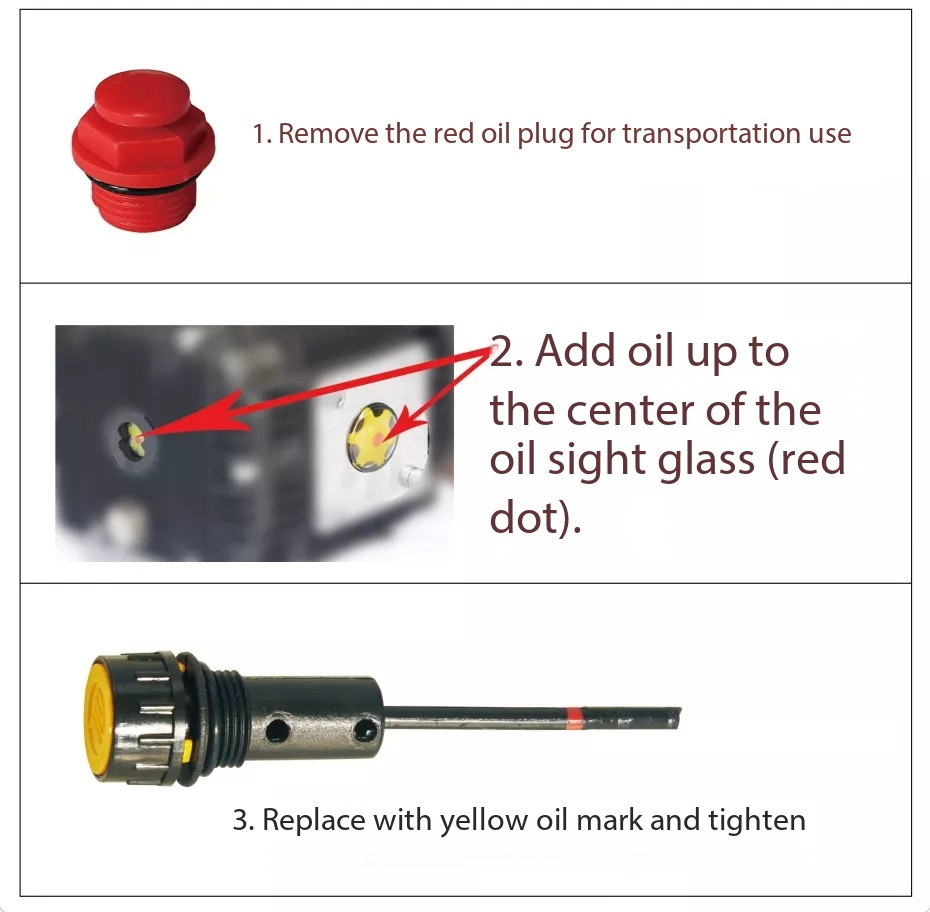
Question 3:
The amount of lubricating oil added to the crankshaft box of the high pressure pump is not correct, or the type of lubricated oil added is not specification, causing crankshaft coils to burn.
The load of the high pressure pump is different according to the different parameters, and the lubricating oil specifications are also different, and improper use affects the work of the high-pressure pump, and even burns the crankshaft, while the oil quantity cannot be too much or too little. Equipment has specific maintenance and maintenance procedures, and high pressure pumps are no exception. Lubricating oil also has a replacement cycle. Without knowing this, failure to replace the lubricating oil for an extended period of time can cause crankshaft coils to burn.
Question 4
The insufficient transmission power is due to the unscientific design of the belt and belt wheel, which causes the high pressure pump to not work properly.
When belt transmission is used, without scientific design calculations, the belt and belt wheel are configured by imagination. The phenomenon arising from this condition is that the belt jumps after the high pressure pump is started, And transfers power in a volatile way, or it appears that the transmission is normal, but short-term work causes the transmission belt to be heated while transferring the heat to the high pressure pump, which is mistaken for having a problem with the high pressure pressure pump, and some customers believe that the power configuration is adequate. In fact, the transmission power did not reach the drive power required for the high pressure pump. A minor loss is that the work is not normal. If it is not resolved in time, long-term work can cause damage to the crankshaft bearing of the high pressure pump or cause the belt to overheat to form a fire.
Question 5
When a high pressure pump is fitted with a joint washer or belt wheel, the installation method is incorrect and the high pressure pump leaks oil.
When a high pressure pump is equipped with a joiner or belt wheel, the installer lacks the necessary expertise. It is thought that the installation of holes and shafts should be convenient. Ignoring or not knowing the tolerances that may exist for machining parts and stalks, you cannot install them. Instead of checking the tolerances and thorns of the shafts and holes, hammer strikes were used, which caused the crankshaft of the high pressure pump to move. The crankshaft oil seal moved, causing oil to leak from the high pressure pump. It is believed that there is a problem with the quality of the high pressure pump.
Question 6:
The strength and stability of the rack were inadequate.
When installing a high pressure pump, the strength of the rack and the stability of the framework should be ensured in the fabrication of the rack. Prevent equipment damage caused by inadequate rack strength.
Question 7.
When the high pressure pump is used in the northern winter, when the temperature drops below zero degree Celsius, ignoring the outpouring of the high pressure water will cause the internal water to freeze and expand to damage the high pressure, and in severe cases will cause it to be scrapped.
Question 8:
Make sure there is a problem with the water supply from the high pressure pump.
If there is no self-priming ability or poor self-priming ability of the high pressure pump to ensure that the water supply pressure in 2-5Bar, and the water flow is higher than the high pressure pump water flow. Water pipes should try to avoid bends at an angle equal to less than 90 degrees, and their pipe diameter should be reduced from large to small.
Question 9
In the initial stage of the operation of the high pressure pump, the air in the pipe should be emitted to avoid the damage of the high pressurized pump caused by air corrosion.
Question 10
When the high pressure pump is connected to the pressure valve, the inlet and outlet water mouth is wrongly connected or the overflow mouth is blocked. The pressure of the high pressure cannot be unloaded, which will damage or destroy the high pressure pressure.