What is the difference between two-stage motors and four-stage motor?
What is the difference between two-stage motors and four-stage motor?
Two-stage motors (two-pole motors) and four-stage motor (four-pole motor) differ significantly in a number of ways.
I. Basic definitions and structure
Two-stage motors (2-pole motors)
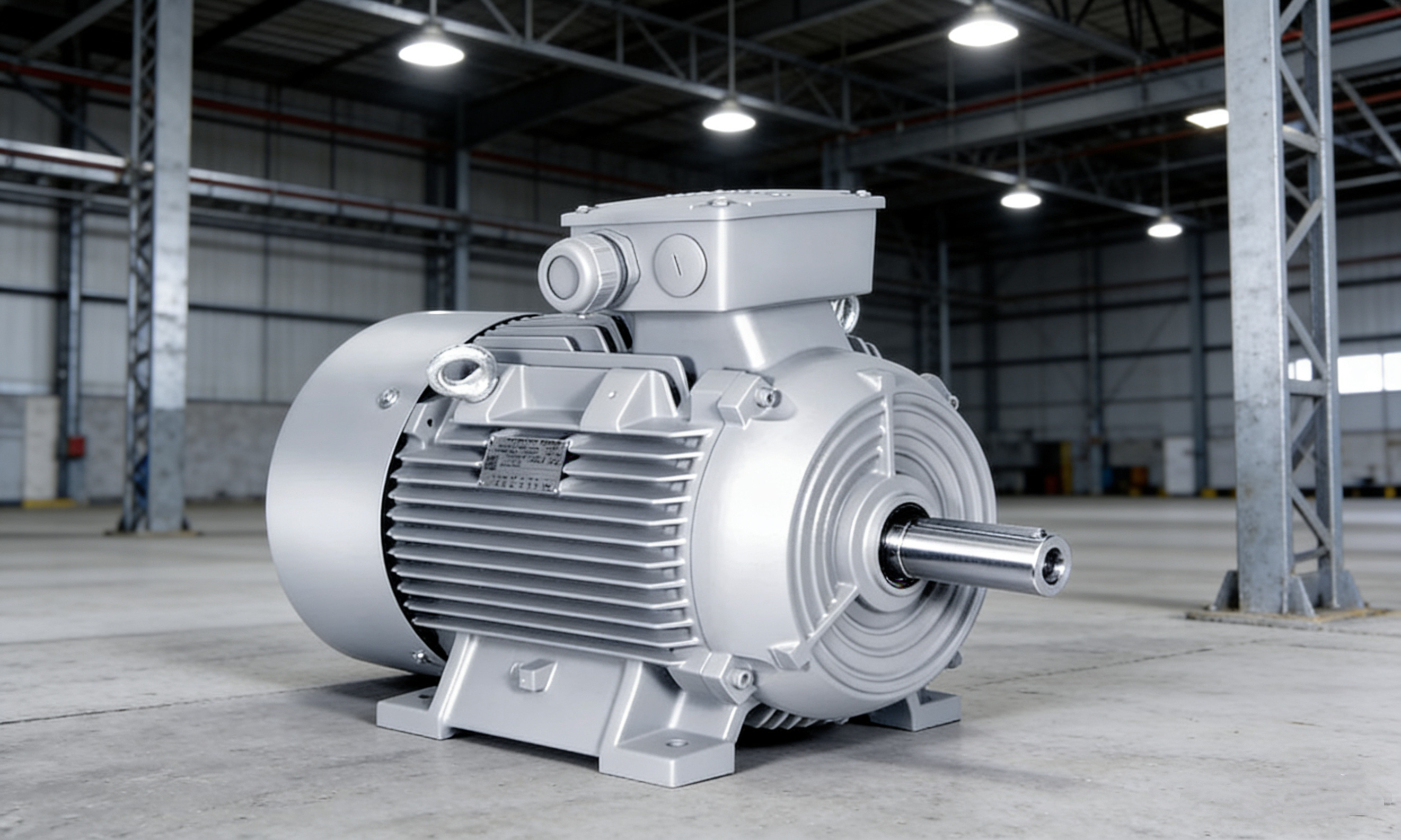
Two-stage motors, also known as bi-polar motors, have only two poles (that is, a pair of magnetic poles) on their rotors. The working principle of this motor is to utilize the principle of alternating current to rotate in a magnetic field, by forming a rotating magnetic field on the rotor, thereby driving the motor to rotate. The structure of two-stage motors is relatively simple, with a smaller volume and a lighter weight.
Level 4 motors (4-pole motors)
A four-stage motor, also known as a four-pole motor, has four poles (i.e. two pairs of magnetic poles) on its rotor. Similar to two-stage motors, the four-stage motor also works by using alternating current to rotate in a magnetic field, but due to the increase of the number of poles, the rotation speed of the magnetic field is relatively slowed down, which makes the output torque of the four- stage motor relatively large. The structure of a four-stage motor is relatively complex and is usually larger in volume and weight than a two-stage motor.
II. Speed and synchronization speed
The speed of the two-stage motor
The speed of two-stage motors is usually higher.At the standard 50Hz power frequency, the synchronous speed of the two-stage motor is 3000 rpm (n = 60f / p, where n is the synchronous speed, f is the power frequency, and p is the pole log).However, in actual operation, due to the sliding difference, the asynchronous speed of the two-stage motor will usually be slightly lower than the synchronous speed, around 2880 rpm.
The speed of a four-stage motor
The speed of a four-stage motor is relatively low.At the same 50Hz power supply frequency, the synchronous speed of the four-stage motor is 1500 rpm (because the pole log p = 2).Similarly, in actual operation, the asynchronous speed of the four-stage motor will be slightly lower than the synchronous speed, around 1450 rpm.
III. Output power and torque
The output power and torque of a two-stage motor
Due to the higher speed, two-stage motors typically have a higher output power. However, this also means that at the same output power, the two-stage motor outputs a relatively small torque. Therefore, two-stage motors are more suitable for high-speed, light-load application scenarios such as fans, power tools, etc.
The output power and torque of a four-stage motor
Level 4 motors usually have a larger output torque due to their lower speed. This makes a four-stage motor more suitable for applications that require a larger torque, such as washing machines, vacuum cleaners, etc. At the same output power, a four-stage motor is able to provide a greater start torque and steady state torque.
IV. Application areas and performance characteristics
Application areas and performance characteristics of two-stage motors
Because of its high speed and light load, two-stage motors are widely used in fans, power tools, compressors, pumps and other equipment that require high-speed rotation.
Performance characteristics: The two-stage motor has the advantages of high efficiency, small size and light weight. However, due to its higher speed, it may generate greater vibration and noise, and the requirements for bearings and seals are higher.
Application areas and performance characteristics of Level 4 motors
Application areas: Grade 4 motors are widely used in washing machines, vacuum cleaners, mixers, fans and other equipment requiring large torque due to their low speed and large torques. In addition, grade 4 motors are often used in situations where smooth start and operation is required, such as elevators, cranes, etc.
Performance characteristics: The four-stage motor has the advantages of stable torque and good start-up performance. Due to its lower speed, vibration and noise are relatively small, and the requirements for bearings and seals are also relatively low. However, four-stage motors are typically larger in size and weight and may be slightly less efficient than two-stage motor.
V. Energy consumption and efficiency
Energy consumption and efficiency of two-stage motors
Two-stage motors usually have a higher efficiency when operating at high speed due to their higher speed. However, the efficiency of a two-stage motor may be reduced in situations where the speed is low or the load changes significantly. In addition, two-stage motors may require a large initial current during the start-up process, which increases the load and energy consumption of the grid.
Energy consumption and efficiency of Level 4 motors
Level 4 motors usually have a higher efficiency when operating at a low speed due to their lower speed. This allows a four-stage motor to have a higher energy saving potential in situations where a long period of continuous operation is required. In addition, the start-up current generated by a four-stage motor during the start-off process is relatively small and has a small impact on the electrical grid. However, due to the larger volume and weight of a Level 4 motor, its manufacturing and maintenance costs may be higher.
VI. PRICE AND maintenance costs
Prices and maintenance costs of two-stage motors
Two-stage motors usually have a high cost-effectiveness due to the advantages of simple structure, small size and light weight. They have relatively low manufacturing and maintenance costs and are easy to repair and replace. However, due to the high demands on bearings and seals for two-stage motors, these components may need to be replaced regularly to maintain their performance.
Prices and Maintenance Costs of Level 4 Electrics
Level 4 motors are usually higher in price due to the advantages of complex structure, large volume and weight. In addition, because of the high manufacturing accuracy and material requirements of grade 4 motors, their manufacturing and maintenance costs are also relatively high. However, due to the advantages of smooth operation and long life of a four-stage motor, its long-term operation cost may be lower.
VII. Selection recommendations and considerations
Selection recommendations
When selecting a motor, the number of poles of the motor should be determined according to the specific application scenario and requirements. For equipment requiring high-speed rotation, a two-stage motor should be chosen; For equipment that requires a larger torque, a four-stage motor should be chosen.
At the same time, factors such as power, efficiency, price, maintenance cost and other factors of the motor need to be considered to comprehensively evaluate the cost-effectiveness of different motors.
Note
When using a motor, ensure that the input voltage and frequency of the motor match the power supply to avoid overload or damage of the motor.
Regular inspection and maintenance of the motor, including cleaning, lubrication, fastening, etc., to ensure its normal operation and extend its service life.
When installing and dismantling motors, relevant safety codes and operating procedures should be followed to ensure the safety of personnel and equipment.In summary, two-stage motors and four-stage motor have significant differences in basic definition and structure, speed and synchronization speed, output power and torque, application areas and performance characteristics, energy consumption and efficiency, price and maintenance costs.