
Application of high-pressure cleaning machines.
A high-pressure cleaning machine is a device that employs high-pressure water jet technology for cleaning purposes. Its core principle is to use a high-pressure pump to pressurize ordinary tap water to hundreds or even thousands of kilograms per square centimeter, and then use a specially designed nozzle to propel the high-pressure water at high velocity, creating a water jet with tremendous impact force. This can effectively remove various stubborn stains, oil residues, rust, and other types of debris. For more detailed product specifications, please click below.
Technical principles.
A high-pressure cleaning machine is primarily composed of high-pressure pumps, motors, water tanks, high-pressure hoses, spray guns, and other components. The high-pressure pump is the core component, as it can pressurize the input water to the desired high-pressure state. The motor provides power to the high-pressure pump, and its size and power vary depending on different power requirements. The water tank is used to store cleaning water, and its capacity affects the continuous working time of the equipment. The high-pressure hose is responsible for transporting high-pressure water from the high-pressure pump to the spray gun, and the nozzles on the spray gun can be replaced according to different cleaning needs to adjust the shape and pressure of the water jet.
Application scenarios.
The applications of high-pressure cleaning machines are extremely diverse. In the industrial sector, it can be used for cleaning machinery and equipment, factory floors, vehicles, and more. For example, in automobile manufacturing plants, high-pressure cleaning machines can quickly remove oil stains and dust from the surfaces of automotive parts, ensuring product quality. In food processing plants, high-pressure cleaning machines are used to clean production equipment and pipes, thereby ensuring food hygiene and safety. In the commercial sector, high-pressure cleaning machines can be employed to clean shopping mall floors, exterior walls, billboards, and other areas, maintaining the cleanliness and aesthetics of commercial spaces. In households, high-pressure cleaning machines are useful for cleaning yard floors, vehicles, swimming pools, and other areas, making daily life more convenient.
Industry standards.
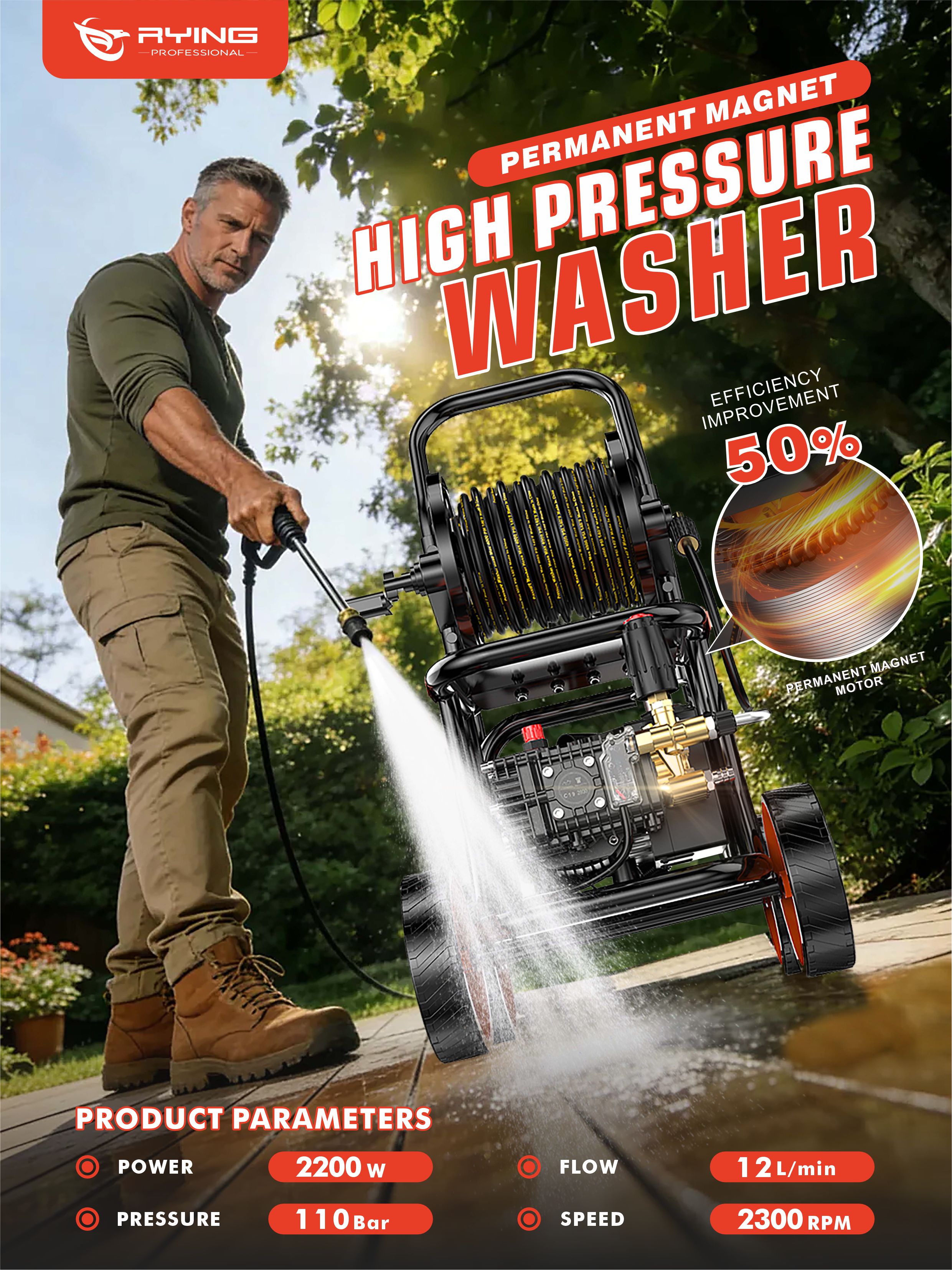
Currently, the high-pressure cleaning machine industry has a range of standards and regulations. Regarding pressure, different types of high-pressure cleaning machines have varying pressure requirements. Generally, industrial high-pressure cleaning machines have higher pressures, reaching over 1000 bar, while household high-pressure cleaning machines have lower pressures, typically ranging from 100 to 300 bar. There are also corresponding standards for flow rates, as the size of the flow affects both cleaning efficiency and water usage. Additionally, the safety features of high-pressure cleaning machines are an important aspect of industry standards, covering aspects such as electrical safety and mechanical safety to ensure that the equipment does not pose a risk to operators during use.
Important considerations for purchase.
When selecting a high-pressure cleaning machine, several factors need to be considered. Firstly, pressure and flow rate. Choose the appropriate pressure and flow rate based on the type of cleaning object. If the cleaning object is particularly stubborn, such as heavy oil stains or rust, higher pressure equipment should be selected. If the cleaning area is large, equipment with higher flow rate should be chosen. Secondly, brand and quality. Choose products from well-known brands, as they generally offer better quality and after-sales service. Additionally, consider the portability and operability of the equipment. If the equipment needs to be moved frequently, choose products with smaller sizes and lighter weights. If the operator is not skilled, choose equipment with simple operation.