How to choose a high-pressure plunger pump?
Recently, I’ve received numerous private messages asking about this type of issue. As an “old hand” who has used five different models of pumps, I’ll share some valuable insights today to help you identify the key differences between high-pressure plunger pumps and guide you on how to choose the right model based on your needs!
I. The “heart” principle of high-pressure plunger pumps: Why is it more suitable for high-pressure scenarios? The core of high-pressure plunger pumps is the reciprocating motion of the plunger, which enables an absorption-discharge cycle by altering the volume of the pump chamber. Compared to gear pumps or lobe pumps, its advantages lie in stable pressure, adjustable flow rate, and wear resistance, making it particularly suitable for scenarios requiring continuous high-pressure output (such as industrial cleaning, agricultural sprinkler systems, and reverse osmosis water treatment). Hubei, as a major producer of pumps, predominantly uses cast iron pump bodies combined with ceramic plungers, balancing durability and cost-effectiveness.
II. Comparison of the 3 Main Types of High-Pressure Piston Pumps: Choose Wisely to Avoid Spending Unnecessary Money! 1. Lightweight Home Models (Pressure ≤ 10MPa) – Suitable scenarios: home car washing, garden irrigation, small-scale livestock farming – Key parameters: flow rate 2-5 L/min, power 0.5-1.5 kW – Advantages: compact size, low noise, easy to move; prices typically range from 800 to 1500 yuan. – Pitfalls to avoid: Do not choose plastic pump heads! They are prone to cracking under prolonged high pressure. Opt for cast iron or stainless steel materials instead. 2. Industrial Standard Models (Pressure 10-30MPa) – Suited scenarios: cleaning of factory equipment, concrete spraying, high-pressure water cutting – Key parameters: flow rate 10-20 L/min, power 3-7.5 kW – Advantagess: wide adjustable pressure range, capable of continuous operation for 24 hours, lifespan up to 5 years or more – Key features: check for the presence of pressure adjustment valves and overload protection to mitigate the risk of pipe rupture. 3. Heavy-Duty Engineering Models (Pressure ≥ 30MPa) – Suitable for scenarios: mine dust control, ship cleaning, large-scale reverse osmosis systems – Key parameters: flow rate ≥ 30 L/min, power ≥ 11 kW – Advantages: dual-piston design reduces pulsations, equipped with imported seals, suitable for extreme environments – Cost reminder: These pumps typically cost over 5000 yuan; it’s advisable to prioritize merchants offering free installation and testing.
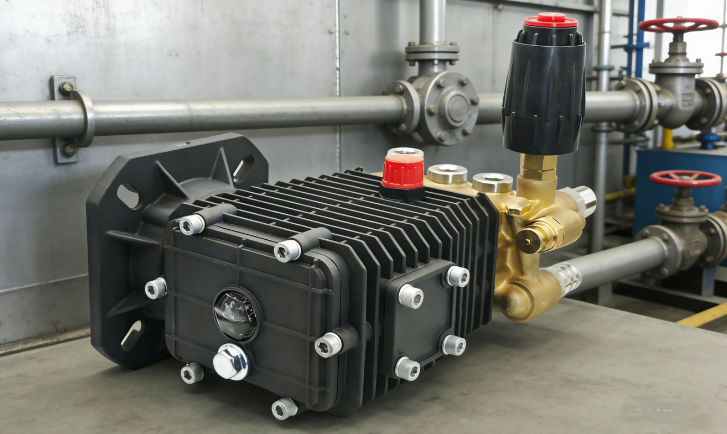
III. The “hidden parameters” of high-pressure plunger pumps: These details determine their lifespan! 1. Plunger material: Ceramic plungers > stainless steel plungers > standard alloys. Ceramic’s wear resistance is more than three times that of metal. 2. Sealing method: Mechanical seals > gland seals. The former has a leakage rate of less than 10%, but replacement costs are 20% higher. 3. Cooling system: Air-cooled models are suitable for intermittent use, while water-cooled models are suitable for continuous high-load operation (e.g., operating for more than 8 hours per day).
IV. Recommendations for Real-World Use Cases: Which type of pump best suits your needs? – Agricultural Users: Choose models with self-suction capabilities, as they can pump water up to 8 meters deep and prevent the pump from overheating due to dry operation. – Construction Site Users: Prioritize mobile models with wheels, equipped with 10-meter high-pressure hoses, to avoid the hassle of frequently moving equipment. – Environmental Companies: Focus on the corrosion resistance of the pump. When handling wastewater, choose a 316 stainless steel pump head, as it has twice the lifespan of an iron-based model.
Interactive time! Which scenario are you selecting a pump for? Is it for household car washing, industrial cleaning, or agricultural irrigation? Leave your requirements in the comments section, and we’ll help you analyze the specific model!