
Structural characteristics of the inclined-disk type axial piston pump
Structural characteristics of the inclined-disk type axial piston pump ()
The inclined-disk type axial piston pump is a commonly used hydraulic transmission device, characterized by high pressure, high flow rate, and high precision. The structural features of this pump are reflected in the following aspects:
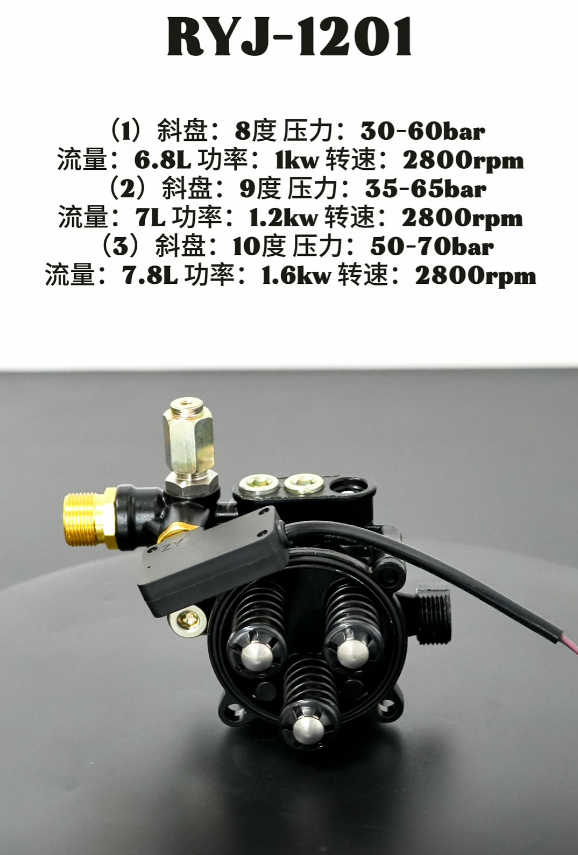
Surface.
Firstly, the inclined-disk type axial piston pump uses axially arranged pistons and a pump housing, generating pressure and flow through axial movement. The inclination angle of the piston rod and the pump body is the same, ensuring the balance of the piston and the smoothness of the axial force, thus reducing the pump’s noise and vibration.
Secondly, the axial piston pump with a swashplate has a large number of pistons, often exceeding 10, so it has a high flow rate and pressure, making it suitable for high-pressure, large-flow hydraulic systems. During operation, the interaction forces between the pistons cause an imbalance in the radial forces, so this type of pump usually uses ball bearings or sliding bearings to support the main bearing, ensuring the stable operation of the pump.
Thirdly, there is a small gap between the plunger and the pump body in a swashplate-type axial piston pump, which gives it high sealing performance and precision. The mating surfaces of the plunger and the pump cylinder are processed using a high-precision manufacturing process to ensure the pump’s sealing performance and accuracy.
Finally, the inclined-disk type axial piston pump uses a variable-inclination disk structure, which allows for stepless flow regulation and pressure limitation. The inclination angle of the disk can be adjusted via a control handle or a hydraulic control valve, making it convenient for users to adjust the flow and pressure according to their needs.
In summary, the inclined-disk type axial piston pump is a hydraulic transmission device that features high pressure, high flow rate, and high precision. Its structural characteristics include axially arranged pistons and pump housing, a large number of pistons, small clearances, and an adjustable inclined disk structure, all of which provide users with more flexible, stable, and precise hydraulic control.