
Principle of the High-Pressure Piston Pump
A high-pressure plunger pump is a hydraulic device that utilizes the reciprocating motion of a plunger within a cylinder to achieve oil suction and pressure by altering the volume of the sealing working chamber. It boasts advantages such as high rated pressure, compact design, and ease of flow regulation, and is widely used in construction machinery, ships, and high-pressure fluid transportation. There are various models available on the market for industrial procurement.
Working Principle and Technical Specifications
A high-pressure plunger pump is a type of volumetric pump. Its core mechanism is that an actuating mechanism drives the plunger to move back and forth within the cylinder, periodically changing the sealed volume, thereby creating a pressure differential.
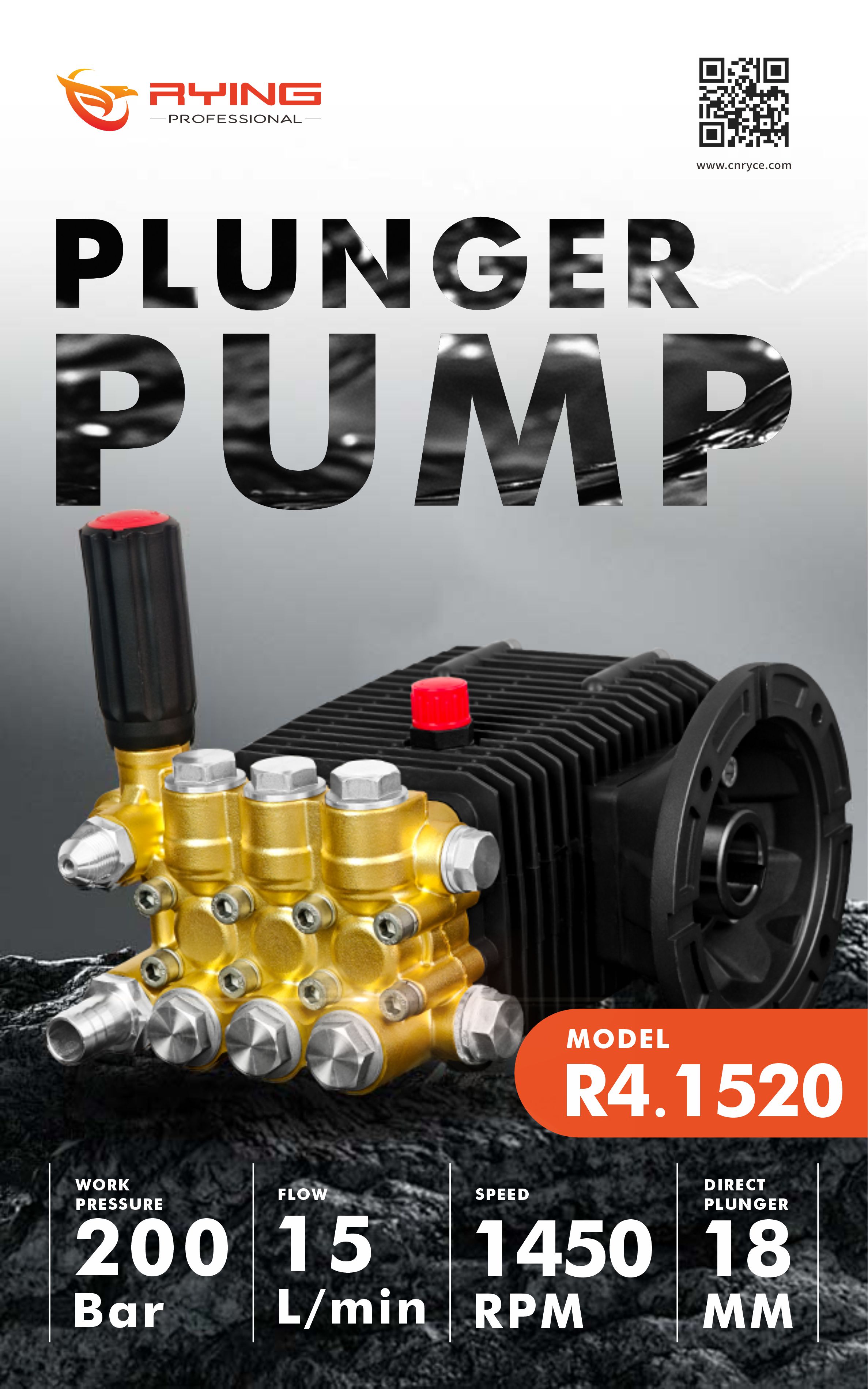
Work process:
Oil-suction phase: As the plunger moves outward, the sealed volume increases, creating a vacuum. Under the influence of atmospheric pressure, hydraulic oil enters the chamber through the oil-suction valve.
Oil-pressure phase: As the plunger retracts inward, the volume decreases, and the oil is compressed. The pressure increases, overcoming the spring force of the oil-discharge valve, and high-pressure oil is then expelled.
Flow characteristics:
Theoretical flow rate: The calculation formula is as follows:
Qt=AsnZ
Qt = AsnZ, where A is the cross-sectional area of the plunger, S is the stroke length, n is the rotational speed, and Z is the number of plungers. In theory, the flow rate is independent of the discharge pressure.
Instantaneous flow rate: The flow pulsation of a single-cylinder pump is relatively high, while that of a multi-cylinder (e.g., three-cylinder) pump can be more stable through the use of phase superposition.
Pressure range:
Standard high-pressure plunger pumps can operate at pressures up to 40MPa, while ultra-high-pressure models can output pressures of up to 70MPa, 160MPa, or even 400MPa.
The discharge pressure of the pump depends on the characteristics of the pipeline and the load, rather than being limited by the pump itself, but is constrained by structural strength and the power of the prime mover.
Features:
High efficiency and energy saving: The volumetric efficiency is usually above 95%, and variable water flow control can be achieved through variable frequency speed regulation to reduce energy consumption.
Medium Compatibility: In principle, any type of medium can be transported, but due to limitations imposed by sealing materials and manufacturing processes, some special media require customization.
Self-priming capability: Possesses good self-priming ability, and usually no need to fill the pump before startup.
Technological Advancement: New technologies such as the multi-phase high-pressure metering plunger pump have achieved precise measurement and anti-solidification functions, making them suitable for composite material production.